The Myth of "One Number": What IQ Really Measures (and What It Doesn't)
IQ scores are often treated like a final verdict on someone's intelligence. In reality, IQ tests mostly measure a narrow set of mental skills: pattern recognition, reasoning speed, working memory, and problem solving under constraints. Those skills are useful, but they're not the whole story of what makes someone capable, creative, or successful.
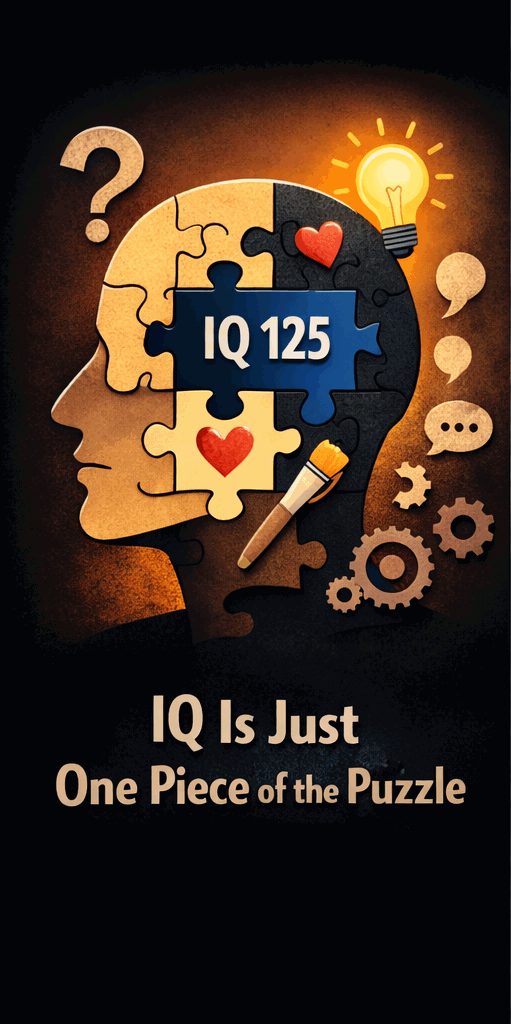
A good way to think about IQ is as a snapshot of how efficiently you solve certain kinds of puzzles. It doesn't capture curiosity, discipline, emotional intelligence, communication, resilience, or creativity—traits that matter a lot in real life. Someone can be brilliant at abstract patterns and still struggle with motivation or stress. Another person might have average test scores but exceptional creativity and persistence, and end up building amazing things.
That's why IQ Ladder focuses on the fun part: the challenge. Your score can be interesting, but the best outcome is discovering how you think, where you get stuck, and how you adapt. The "win" is progress—getting better at spotting structure, staying calm, and trying new strategies when the obvious one fails.
If you want to use IQ tests in a healthy way, treat the result like a game stat, not an identity. It's a measurement of performance in a particular context, on a particular day, with a particular set of puzzle types. The most meaningful comparison is not against other people—it's against your own past self.